
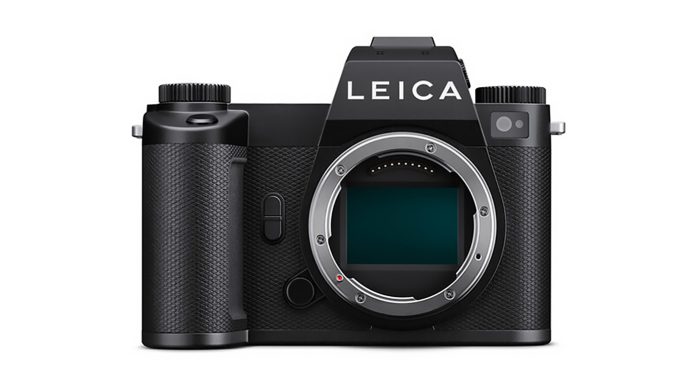
Leica cameras tend to start two conversations. The first is about the camera. The second is about whether the camera is worth what Leica charges for it. The Leica SL3-P is no exception.
We’ve reviewed dozens and dozens of cameras, but this is our first Leica review. That’s surprising given Leica’s long history in photography, though Leica hasn’t always been the first name video creators think of. The SL3-P could help change that. It’s about time, and we’re glad Leica has come around.
At $6,690 for the body, the SL3-P is a premium full-frame mirrorless camera built for professional hybrid shooters, the people who capture both video and photos, often on the same job.
On the video side, it records 8K, open gate and 4K at up to 120 frames per second. Open gate uses more of the sensor’s height, which gives editors more room to crop later. Apple ProRes, L-Log and HLG are all supported. So are timecode and RAW video output over HDMI. Behind all that sits a 44.9-megapixel effective sensor with fast burst shooting and hybrid autofocus, wrapped in a rugged metal body.
The SL3-P lands in an interesting spot in Leica’s SL3 lineup. The SL3 offers about 60 megapixels for shooters who want maximum photo detail. The 24-megapixel SL3-S leans toward speed and video. The SL3-P splits the difference with about 44 megapixels. For a hybrid shooter, that balance makes a lot of sense. One camera can record an interview and shoot slow-motion B-roll. The same body then handles detailed campaign photos and images for social.
After using the SL3-P for both video and photos, we came away impressed. Color is one of its greatest strengths, and the video gives you plenty to work with in the grade. Photos are full of detail, and autofocus worked well for much of our testing. The body feels like it can take years of professional use.
It’s also expensive, heavy and sometimes frustrating. Our biggest complaint has nothing to do with image quality. It’s the controls.
We didn’t like the blank buttons or the lightly marked dials. Leica’s design looks clean, but that clean look makes the camera harder to run by touch. In a dark studio, on a busy set or under a tight deadline, that becomes a real problem. The blank controls didn’t ruin our experience. They did get in the way of an otherwise polished hybrid camera.
Built for hybrid production
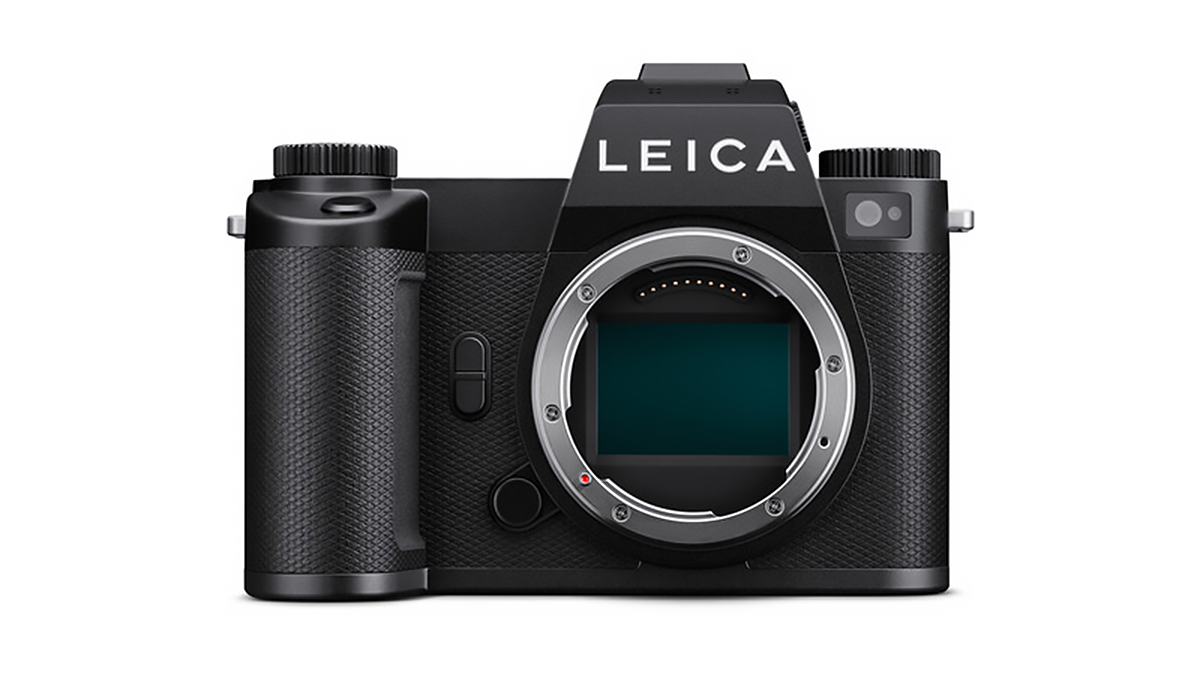
The SL3-P pairs a 44.9-megapixel effective full-frame BSI CMOS sensor with Leica’s Maestro IV processor and 8 GB of memory. The backside-illuminated design helps the sensor gather light more efficiently.
For a hybrid shooter, the sensor strikes a useful balance. There’s enough resolution for 8K video and open gate recording, plus large photos for ads, thumbnails and posters. Websites and other campaign materials are covered, too. A video creator can stop recording, switch to photo mode and capture high-resolution stills without reaching for a second camera.
There’s no optical low-pass filter. That lets the camera capture very sharp detail, but repeating patterns can produce moiré, those strange lines and false colors in fine detail. Watch for it with fine clothing and screens. Buildings and other tightly patterned subjects can trigger it, too.
Burst shooting reaches 40 photos per second with continuous autofocus. That may sound like a sports-only feature, but it earns its keep on a hybrid set. You can cover the main action as video, then fire off a fast burst for a poster, website or social post. A wedding filmmaker can grab stills between video shots. A documentary crew can capture the story in motion and a strong photo for publication.
There is one catch. The fastest 40 fps mode uses the electronic shutter and records 12-bit DNG files. Switch to 14-bit files, and the top speed drops to 25 fps. Those extra bits give you more information to work with in post, so it’s a real trade-off.
The electronic shutter can also distort fast movement, making a moving object look bent or stretched. The same basic problem shows up in video. It’s called rolling shutter, and we’ll get to it later.
A strong but heavy body
The SL3-P feels ready for professional production. Its full-metal body uses magnesium and aluminum. An IP54 rating adds protection against dust and splashing water. The card doors, battery door, screen hinge and dials all feel solid. Nothing feels cheap.
That build has a price. The camera weighs about 768 grams, or about 1.7 pounds, without the battery, memory cards or body cap. That doesn’t sound bad until you build a video rig around it. Add a fast zoom lens, cage, monitor and microphone, and the system gets heavy quickly.
The deep grip helps when shooting handheld, and the body feels at home with larger L-Mount lenses. Put a small prime on it, and the camera becomes easier to carry or balance on a gimbal.
Size and weight matter for hybrid crews. You might put the SL3-P on a tripod for an interview, move it to a gimbal for B-roll and then shoot photos by hand. The camera can handle all three jobs. You just need to plan your support gear around its weight.
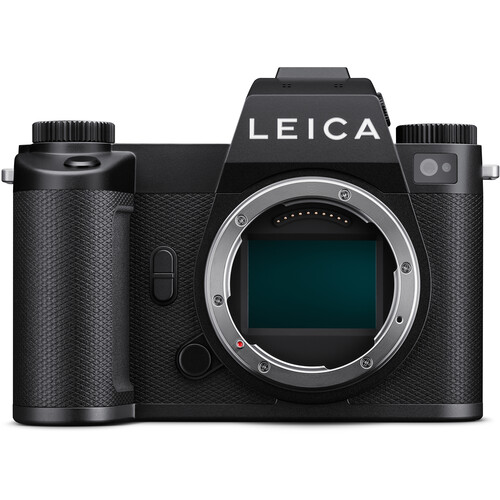
The design itself is simple and quiet. There’s no red Leica badge on the front. The black finish and limited branding may also help the camera draw less attention at weddings, events and documentary shoots.
Blank controls slow down the crew
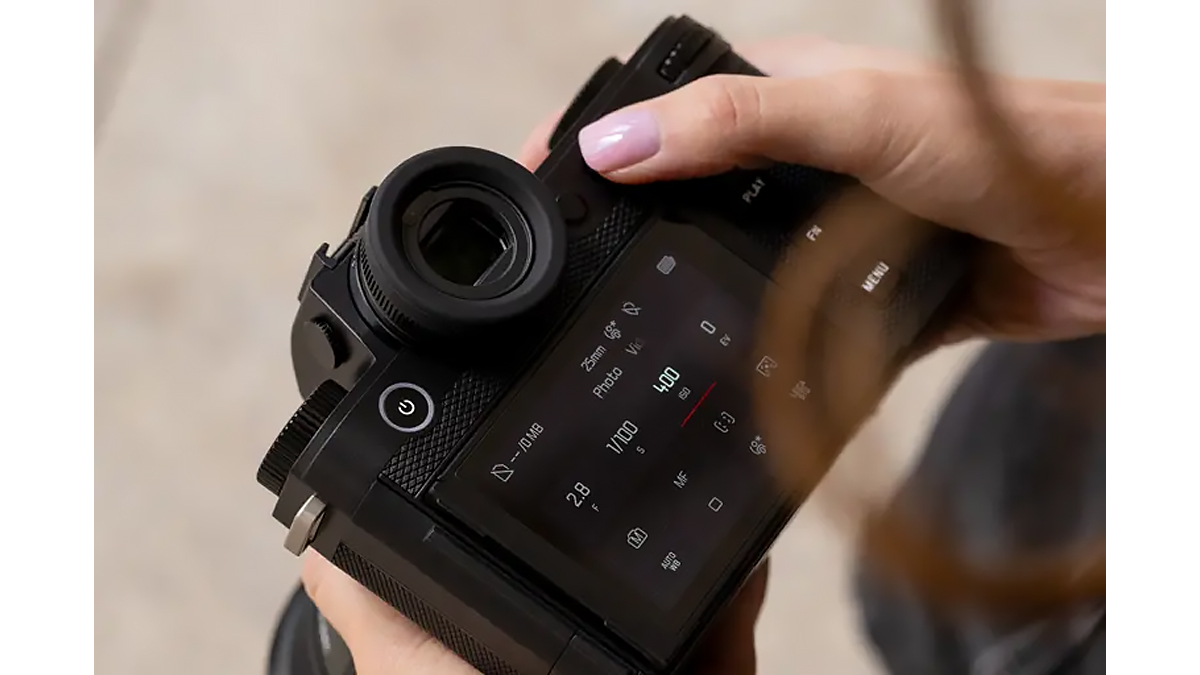
Several buttons on the SL3-P are blank because you can change what they do. There’s some logic to that. If a button’s function can change, a printed label might end up wrong.
In actual production, though, we found the blank buttons frustrating. During setup, we sometimes pressed the wrong one. We built separate setups for video and photos, but remembering what each blank button did still took time.
It got worse in low light. A video shooter may need to change white balance, stabilization or autofocus without looking away from the scene. A blank button gives you no reminder of what it does.
Blank buttons also make the camera harder to share. A director of photography might set up the camera and hand it to another operator or an assistant. That person has no quick way to glance at the body and know what each custom button does. Rental houses and production companies that pass gear between several people will run into the same problem.
The dials are easier to find thanks to their shapes and locations. They also feel excellent, with enough resistance to make each adjustment deliberate.
Still, clearer markings would help. Leica could add small labels or changeable button caps. An on-screen guide that quickly shows each button’s job would work, too. As it stands, the design puts its clean appearance ahead of fast operation, and minimal design isn’t always useful design.
After enough practice, we learned the layout. We still didn’t like the blank controls.
Clear menus and plenty of customization
The menu system is much easier to understand than the outside controls. Video and photo modes get their own menu colors: yellow for video, red for photo. It’s a quick visual cue for which side of the camera you’re setting up. The menus respond quickly and avoid many of the crowded pages found in other cameras.
There are plenty of ways to customize the camera, too. In video mode, we set up quick access to resolution, frame rate and autofocus, plus stabilization and audio. In photo mode, we prioritized subject tracking, burst speed and exposure. Once the camera was set up the way we wanted, it became much faster to use.
Customization doesn’t fix the blank controls, though. It only lets you choose what each blank button does.
Leica takes video seriously
Video isn’t a small extra on the SL3-P. It’s a major part of the camera.
Standard 8K tops out at 30 fps. The SL3-P also records 8K open gate at 8064 x 5376 at up to 24 fps and 7.2K open gate at 7200 x 4800 at up to 30 fps.
Open gate is one of the more useful tools for creators who need to deliver one project in several formats. Instead of recording only a wide 16:9 image, it uses a taller 3:2 area of the sensor. That gives you extra image above and below the normal widescreen frame to use later. One recording could become a standard wide video, a vertical social video or a square post. On interviews, it lets you adjust framing, cut a tighter digital shot or fix a composition that was a little off on set.
The 8K footage gave us excellent detail, along with more room to crop or deliver a high-resolution final. Of course, 8K comes with a cost. The files get large, and the most demanding modes need fast memory cards. Editing high-resolution footage can also put a lot of stress on a computer, so some projects will go more smoothly with proxies.
For most jobs, 4K will be the more practical choice. It takes less storage and is easier to edit. You still get plenty of detail.
Beyond 8K, the SL3-P records about 5.9K at up to 60 fps and 4K at up to 120 fps. The 120 fps modes are great for slow motion, but they crop the image slightly, so your lens will look a little tighter than it does in other modes. Plan for that before choosing a lens.
The SL3-P also supports Apple ProRes, L-Log and HLG. Leica’s flat L-Log profile keeps more image information for color work. HLG covers HDR delivery. The camera can also send RAW video to a compatible external recorder over HDMI.
These are real production tools. Leica didn’t add video simply because customers expect a photo camera to have it. The SL3-P feels built with video production in mind, and for our first Leica review, that was good to see.
Color and video image quality
Color is one of the SL3-P’s greatest strengths. L-Log footage gave us room to adjust exposure and color. Transitions between bright and dark areas looked smooth. Skin tones were pleasing and didn’t need much work to get where we wanted them.
That matters for a hybrid shooter. Matching photos and video from the same job can take time. It helps when both sides of the camera start from a good place.
JPEGs looked good straight from the camera, which is handy when a client needs photos before the video edit is done. DNG files gave us much more room to change exposure, color and white balance.
The SL3-P captures plenty of detail, too. Full-resolution photos measure 8144 x 5424 pixels, enough for large prints and posters as well as web and social work. We were also happy with how much information lived in the darker parts of our photos. We could brighten shadows before noise became too distracting.
L-Log video gave us useful room to work as well. That doesn’t mean you can ignore exposure. No camera can bring back highlights that are completely blown out, and the SL3-P still rewards careful lighting.
Rolling shutter limits fast motion
The SL3-P can produce excellent video, but fast motion is one of its weaker areas. This is where rolling shutter comes in.
A camera sensor doesn’t always capture every part of the image at exactly the same moment. It may read the image from one part of the sensor to another. If the camera or subject moves quickly while that happens, straight lines can bend or lean. We saw it with faster subject movement and quick camera moves. The same thing can happen when shooting photos with the electronic shutter.
For interviews, product videos, weddings and controlled commercial work, this may not be a major concern. Sports, cars, fast handheld work and whip-quick camera moves are another story.
The SL3-P doesn’t use a stacked sensor, a design that can read image data much faster. That doesn’t make it bad for action. It just means you need to understand its limits. High frame rates don’t automatically mean fast sensor readout.
Autofocus for a solo operator
Autofocus hasn’t always been one of Leica’s biggest strengths, but the SL3-P shows real progress. Its system combines phase detection, contrast detection and depth mapping to decide what should be sharp and how far to move the lens to get there. It has 819 autofocus points and recognizes people, animals and cars.
During our video testing, autofocus worked well for interviews, presentations and controlled movement. Face and eye detection followed people without much hunting or pulsing. If someone looked away or briefly left the frame, the camera usually found them again.
That’s a big help for a solo shooter. When you’re running the camera while watching exposure and checking audio, dependable autofocus takes one more job off your list.
Tougher scenes still needed attention. The camera could hesitate with several faces in frame, or when something passed between the lens and the person we wanted to follow. Fast movement toward the camera could also cause missed focus.
The SL3-P also recognizes fewer subject types than some competing systems. Leica gives you people, animals and cars rather than a long menu of options. For interviews, weddings, events, commercial work and documentaries, we found the autofocus useful. For fast action that can’t be repeated, we’d still keep a close eye on it.
The same system works well for photos. You can record an interview, then switch over to shoot portraits without changing cameras. That’s exactly what a good hybrid camera should let you do.
Stabilization for handheld work
The SL3-P has five-axis in-body image stabilization rated for up to 5 stops. For video, it smoothed out small movements while shooting handheld. Static shots looked more controlled, and little shakes were less distracting. Walking shots still looked like walking shots, though. IBIS doesn’t replace a gimbal, tripod or shoulder rig. It gives you another tool when you need to shoot quickly by hand.
It helps with photos, too. Stabilization reduces camera shake at slower shutter speeds, which is useful when you’re shooting stills in the same lower-light setup you’re using for video. Just remember that it only counters camera movement. It can’t stop your subject from moving.
The sensor-shift system also enables a Multishot mode. Multishot moves the sensor slightly between several frames, then combines them into one much larger file, up to 176.7 megapixels. That could be useful for product photography, artwork or any job where you need a huge amount of detail.
There are limits. Leica recommends a tripod, and movement inside the scene can cause problems since the camera is combining several separate exposures. A built-in tool helps reduce some of those motion artifacts, but Multishot still works best with a still camera and a still subject. It’s a specialty feature. On the right commercial shoot, it could be a very useful one.
Low-light production
For photos, the SL3-P offers an ISO range of 50 to 200,000.
Video stayed useful in moderate low light during our testing, and color held steady through the settings we were most likely to use. As we pushed higher, noise became easier to see and fine detail softened. Autofocus also worked well in moderate low light. In very dark scenes, it slowed down and could search when a face or object didn’t have enough contrast.
The electronic viewfinder is excellent. It has 5.76 million dots and runs at either 60 or 120 fps. It’s sharp, bright and comfortable, which helped when checking focus and exposure in darker spaces. The 3.2-inch rear touchscreen is useful, too, though many video crews will still want an external monitor for a bigger image and more video tools.
For photos, ISO 3,200 and 6,400 gave us useful results with light noise reduction. The extreme end of the range is there when you need it. We wouldn’t make a habit of using it.
Media, ports and workflow
The SL3-P has two memory card slots. One takes CFexpress Type B cards, and the other takes SD cards with UHS-II support. CFexpress Type B is the better choice for the most demanding video formats or long photo bursts. Not every recording mode works on every type of media, so check the requirements before buying cards.
There’s another useful option. The SL3-P can record directly to a compatible external SSD over USB-C. Leica supports external SSDs up to 2 TB, but the camera can’t record to an SSD and an internal card at the same time.
For connections, you get a full-size HDMI 2.1 port and USB-C. Separate 3.5 mm microphone and headphone jacks are there, along with timecode support. Full-size HDMI is especially welcome on a video camera. It’s sturdier and easier to manage on a rig than the smaller HDMI ports on many mirrorless cameras. Timecode gives cameras and audio recorders a shared reference, which makes lining up footage and sound in the edit much easier.
These features help the SL3-P fit into a larger production. Just remember that 8K video and 44-megapixel photos eat through storage quickly. The camera body is only part of the cost. Budget for fast cards, SSDs and backup drives, plus a computer powerful enough to handle the footage.
The L-Mount system
The SL3-P uses the L-Mount, which opens up lenses from Leica and other L-Mount Alliance companies, including Panasonic and Sigma. That’s a major strength. Leica makes excellent lenses, but they can be expensive. The wider L-Mount system gives you more choices across prices, sizes and focal lengths.
Small primes make the SL3-P easier to carry and use on a gimbal. Large zooms make more sense for some events and commercial jobs, but they also make the full system much heavier.
Video shooters should look past sharpness when choosing a lens. Focus breathing is one example. A lens can be great for photos but annoying for video if its field of view shifts too much during a focus pull. Manual focus feel and autofocus performance matter, too. The breadth of L-Mount glass makes it much easier to build the SL3-P into the system you need.
Who should buy the Leica SL3-P?
The SL3-P makes the most sense for professional hybrid shooters who regularly need both video and photos. Commercial work, weddings and events are a strong fit. So are documentaries, interviews, travel and editorial projects. You get detailed video, flexible recording options and high-resolution photos in one rugged body.
Existing Leica SL users may have another reason to look. The SL3-P gives them a middle ground between the higher-resolution SL3 and the faster, lower-resolution SL3-S.
The decision is harder if you’re starting from scratch. Other cameras cost less. Some have faster sensor readout, and others recognize more types of subjects for autofocus. The SL3-P isn’t a camera you buy off a spec sheet. Part of the price goes toward its construction, color, lens system and Leica’s approach to design. Whether that’s worth $6,690 depends on the work you do.
Final verdict
After reviewing dozens and dozens of cameras, we’re surprised the Leica SL3-P is our first Leica. It was worth the wait. More important, Leica finally feels like it’s speaking directly to hybrid shooters.
The SL3-P records detailed 8K and open gate video. ProRes and L-Log are on board, along with timecode and full-size HDMI. External RAW video and professional audio connections complete the video toolkit. Then there’s the 44.9-megapixel effective sensor, which delivers high-resolution photos for the same client or campaign as your video. The photo side doesn’t feel separate from the video tools. Both work together to make this a useful camera for anyone who has to deliver more than one type of content.
Autofocus worked well for much of our testing, and stabilization helps when shooting handheld. The body feels ready for professional use, and L-Mount gives you a wide choice of lenses.
The SL3-P still has weaknesses. Rolling shutter makes fast motion harder. High-resolution video means large files and a more demanding editing workflow. Add a big lens and a video rig, and the camera gets heavy quickly.
Our biggest frustration is much simpler. It’s the controls. The blank buttons and lightly marked dials look elegant, but they slow down the person using the camera. They’re even more frustrating when the camera gets handed to an assistant or another operator. After enough time with the SL3-P, we learned the layout. We still didn’t like it.
The SL3-P isn’t the least expensive hybrid camera. It isn’t the best choice for every kind of action, and other cameras offer more features for less money. It does get something important right, though. It feels like one camera rather than a photo camera with video bolted on. You can shoot an interview, grab slow-motion B-roll and take high-resolution photos, then walk away with everything needed to finish an entire campaign.
That’s what a modern hybrid camera should do, and Leica is now firmly part of that conversation. We’re happy the company has come around.
For the right hybrid shooter or production company, the SL3-P’s mix of video quality, photo performance and strong construction may be enough to justify its high price. For everyone else, it’s an excellent camera that’s easier to admire than to afford.
Strengths
- 44.9MP sensor balances 8K video and high-resolution stills
- 8K and open gate recording with ProRes and L-Log
- Excellent color that grades easily
- Rugged IP54 magnesium and aluminum body
- Full-size HDMI 2.1, timecode and USB-C SSD recording
Weaknesses
- Blank buttons slow down operation
- Rolling shutter limits fast motion
- Gets heavy once rigged
- $6,690 body price
Tech specs
| Image sensor | Full-frame BSI CMOS, 44.9MP effective, no low-pass filter |
| Processor | Leica Maestro IV, 8 GB memory |
| Lens mount | L-Mount |
| Video | 8K (7680 x 4320) at up to 29.97 fps 8K open gate (8064 x 5376) at up to 24 fps 7.2K open gate (7200 x 4800) at up to 29.97 fps 5.9K at up to 59.94 fps 4K and C4K at up to 120 fps (cropped) |
| Codecs | H.265, H.264, Apple ProRes 422 HQ |
| Log and HDR | L-Log, HLG |
| RAW video | Via HDMI to a compatible external recorder |
| Photo resolution | 8144 x 5424 (44.2MP) Multishot up to 176.7MP |
| Burst shooting | Up to 40 fps (12-bit, electronic shutter) Up to 25 fps (14-bit) |
| ISO | Photo: 50 to 200,000 Video: 50 to 100,000 |
| Autofocus | Hybrid (phase detection, contrast, depth mapping), 819 phase-detection points Person, animal and vehicle detection |
| Image stabilization | 5-axis in-body, up to 5 stops |
| Viewfinder | 5.76 million dots, 60 or 120 Hz |
| Rear screen | 3.2-inch touchscreen, 2.33 million dots |
| Media | 1x CFexpress Type B 1x SD (UHS-II) USB-C SSD recording |
| I/O | Full-size HDMI 2.1 USB-C (3.1 Gen 2) 3.5 mm mic input 3.5 mm headphone output Timecode |
| Weather sealing | IP54 |
| Weight | Approx. 768 g (without battery, cards or body cap) |
| Price | $6,690 (body) |

