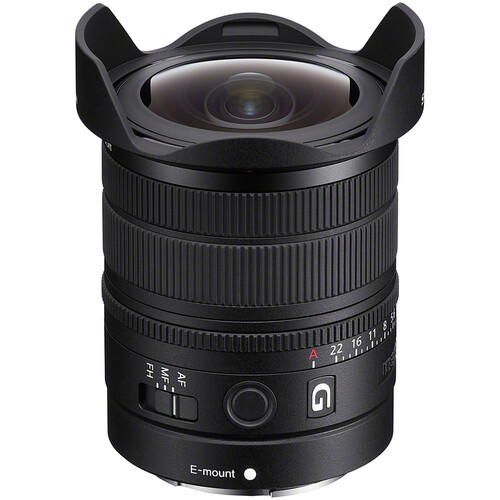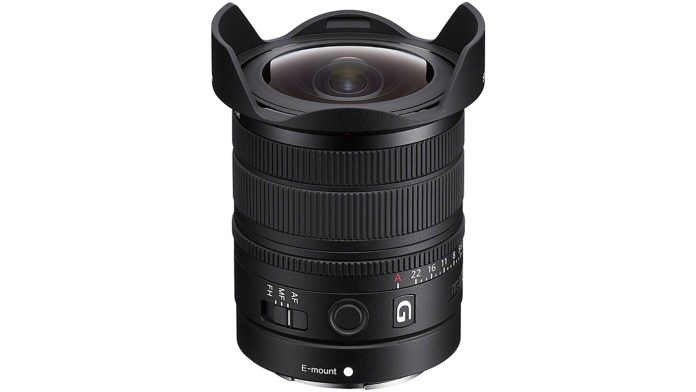
Sony has announced its first fisheye zoom for full-frame E-mount. The FE 8-14mm F3.5 Fisheye G (SEL814G) holds a constant f/3.5 across the range and fills a gap Sony hasn’t addressed since the A-mount 16mm f/2.8 roughly two decades ago.
Circular to diagonal in one lens
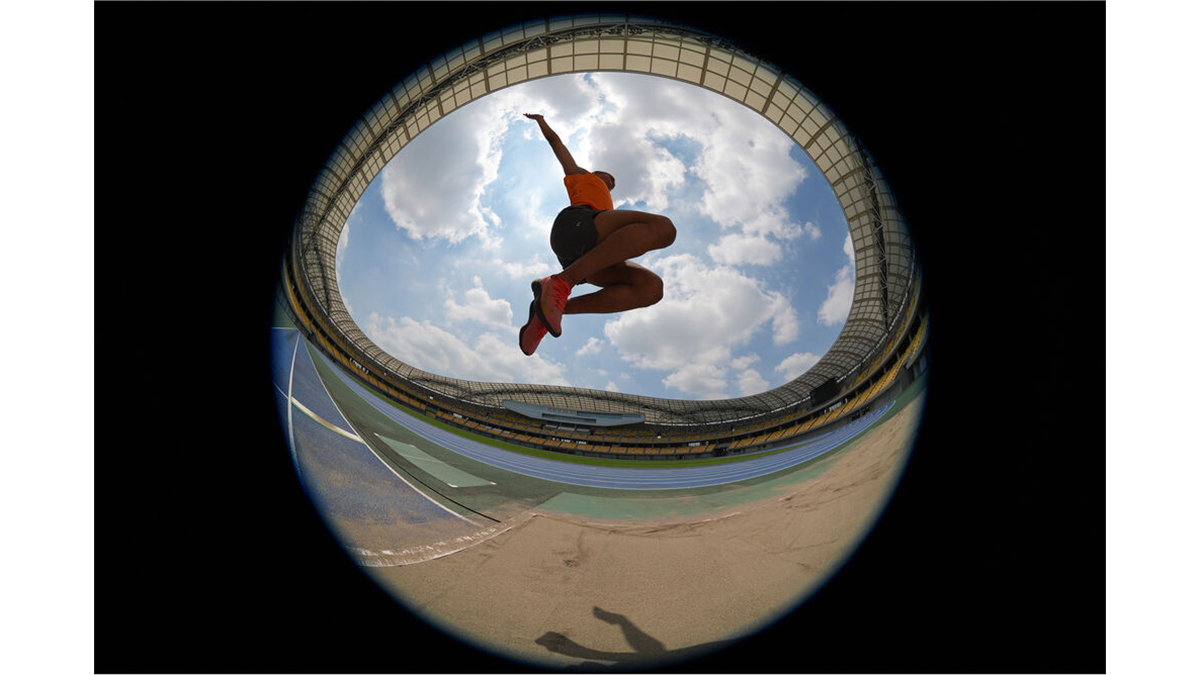
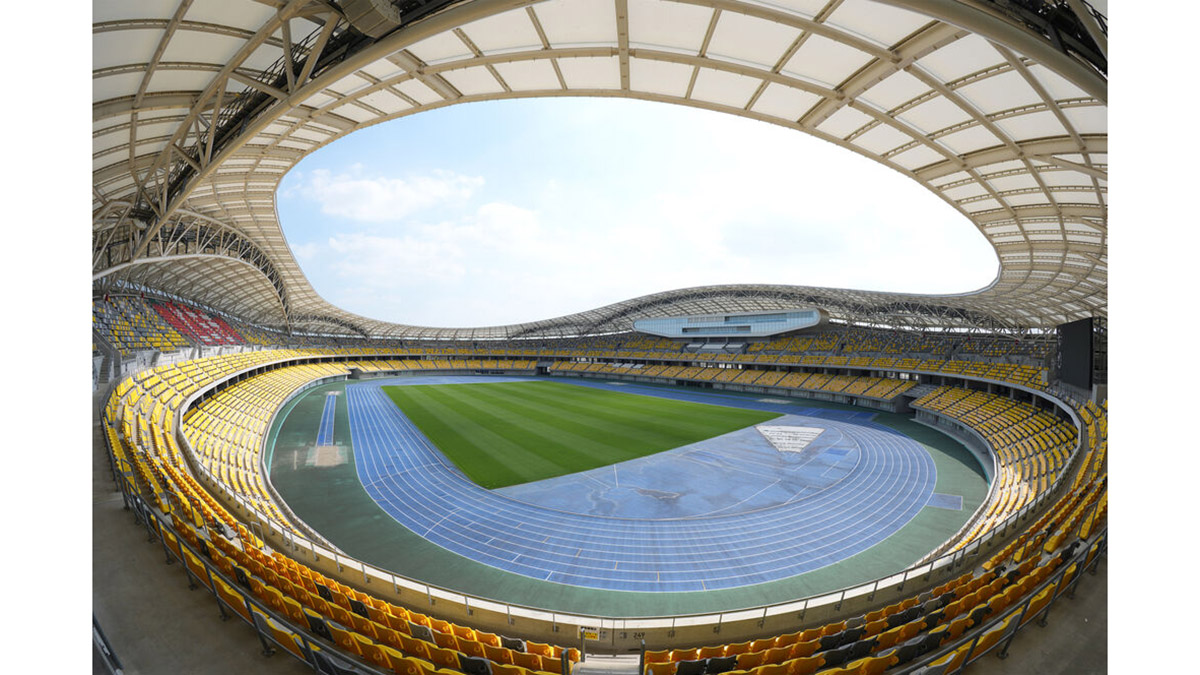
The 8-14mm covers a 180-degree angle of view throughout the zoom range. At 8 mm you get the classic circular fisheye projected onto the full-frame sensor. Zoom toward 14 mm and the image expands until it fills the frame as a diagonal fisheye. Sony uses equisolid projection at the wide end and equidistant at the long end, with a toggle for distortion compensation.
Minimum focus distance is 5.9 inches (15 cm), so you can push the lens right up against a subject and still hold focus.
Optical design
The lens is built with 16 elements in 14 groups, including three aspherical elements, four ED (extra-low dispersion) elements and one ED aspherical element. Sony says that combination controls chromatic and spherical aberration well enough to hold G-series resolution across the whole zoom range.
Zooming happens internally. The barrel doesn’t extend, which keeps a gimbal balanced through a zoom and stops the front element from pumping air into the housing.
Autofocus
Two linear motors drive focus, delivering fast, quiet and accurate tracking for stills and video alike. Sony also lists suppressed focus breathing, which matters more here than on most lenses given how much a fisheye exaggerates any shift in framing.
Linear Response MF makes manual pulls predictable, with focus-ring rotation mapping directly to focus travel. There’s a focus-mode switch and a zoom lock on the barrel.
Constant maximum aperture
The constant f/3.5 means exposure holds steady as you zoom, which is the whole reason a video shooter cares about a constant-aperture zoom. The iris uses seven blades for rounded out-of-focus rendering.
The dedicated aperture ring de-clicks for video, so you can ride exposure smoothly mid-take.
Rear filters
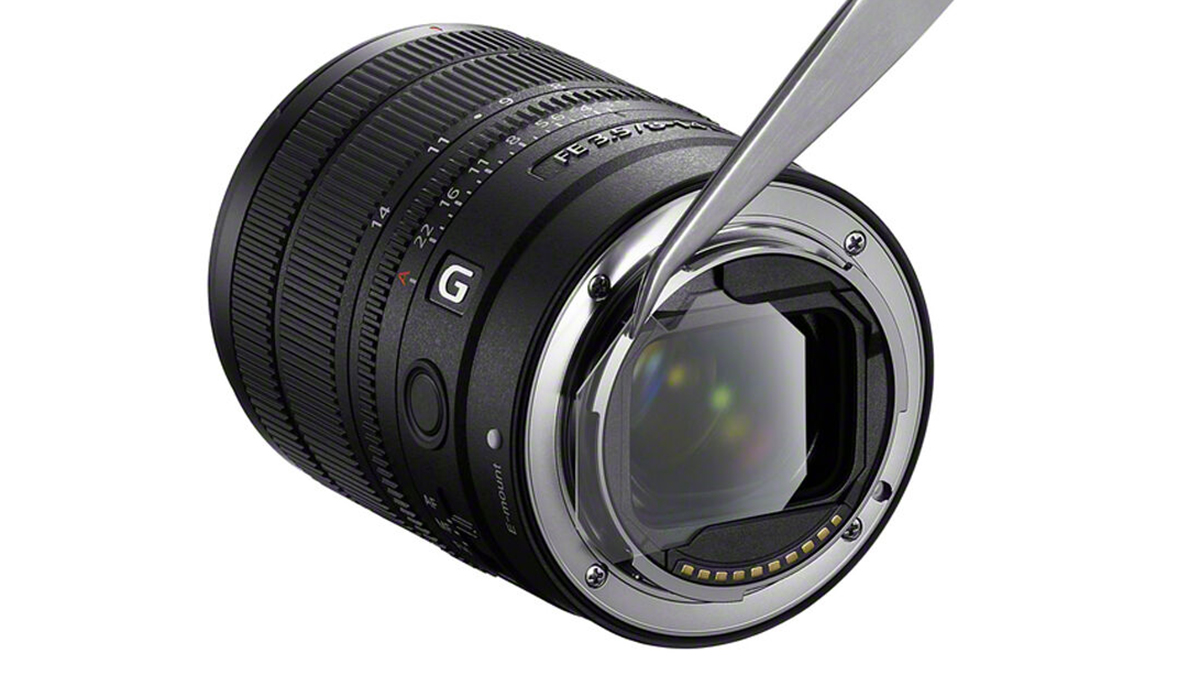
The curved front element rules out screw-in filters. Sony’s answer is a rear filter holder that accepts sheet filters, and the lens ships with a cutting template so you can make your own.
Build
The curved front element rules out screw-in filters. Sony’s answer is a rear filter holder that accepts sheet filters, and the lens ships with a cutting template so you can make your own.
Spatial capture
Mount two of these on a pair of VENICE Extension System Mini units and the optical axes sit about 64 mm apart, close to human interocular distance. That makes the 8-14 mm a working option for stereoscopic and immersive content, not just a novelty wide.
What we think
A fisheye isn’t a lens most people reach for every day, but the perspective is always eye-catching. Sony’s version covers both looks in one barrel, which is more useful than a fixed circular fisheye that only does one thing.
For video, the constant aperture and internal zoom are the features that earn it a place in the bag. Fast, quiet autofocus and the close focus distance help too. Some shooters will want faster than f/3.5, though holding it there is what keeps the lens this small.
At $1,599, it isn’t impulse money. Laowa’s manual-focus 8-15mm f/2.8 covers similar ground for around $699 if autofocus isn’t a requirement. But if you want a first-party fisheye with AF that works with Sony’s video features, this is the only one there is.
Pricing and availability
The Sony FE 8-14mm F3.5 Fisheye G is available to pre-order now at $1,599 in the US and $1,999 in Canada. Shipping starts in October.