
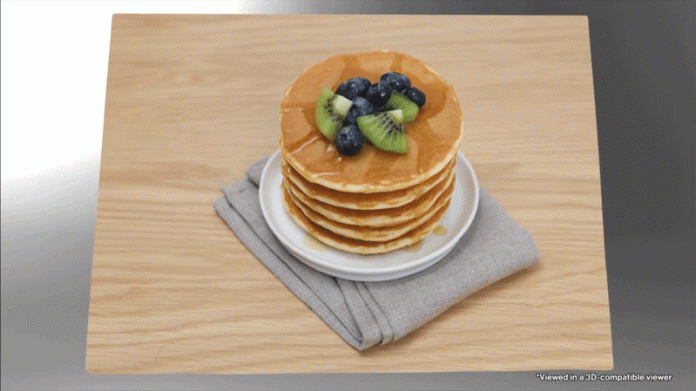
Canon has announced Dual Pixel 3D, a technology that uses the company’s Dual Pixel CMOS AF hardware to generate 3D images on compatible EOS cameras. All you need is the Dual Pixel 3D Converter app. No special gear is required to capture the images or view them afterward.
Dual Pixel 3D Converter app
The Dual Pixel 3D Converter is a free application for creating 3D content. For now, Canon says it’s Windows-only, which leaves out a sizable chunk of the photo world.
The app converts Dual Pixel RAW images captured with select EOS cameras. It also works with JPEGs carrying depth information from the new EOS R8 Mark II. Either way, it needs just one image to produce the 3D output.
What does the app create?
The app outputs 3D images that carry depth information. It can also generate 3D models in OBJ or GLB format, both of which open in standard 3D applications.
Controls let you dial in how much depth the final image shows, from a pronounced 3D effect to something subtler and flatter. You can also isolate the main subject and either remove or replace the background. From there, the app exports a 3D model or a stereographic photograph.
How does it work?
Dual Pixel 3D takes advantage of how Canon’s sensors are built. Every pixel holds two photodiodes, which the camera can read separately for phase-detection autofocus or combine into a conventional image.
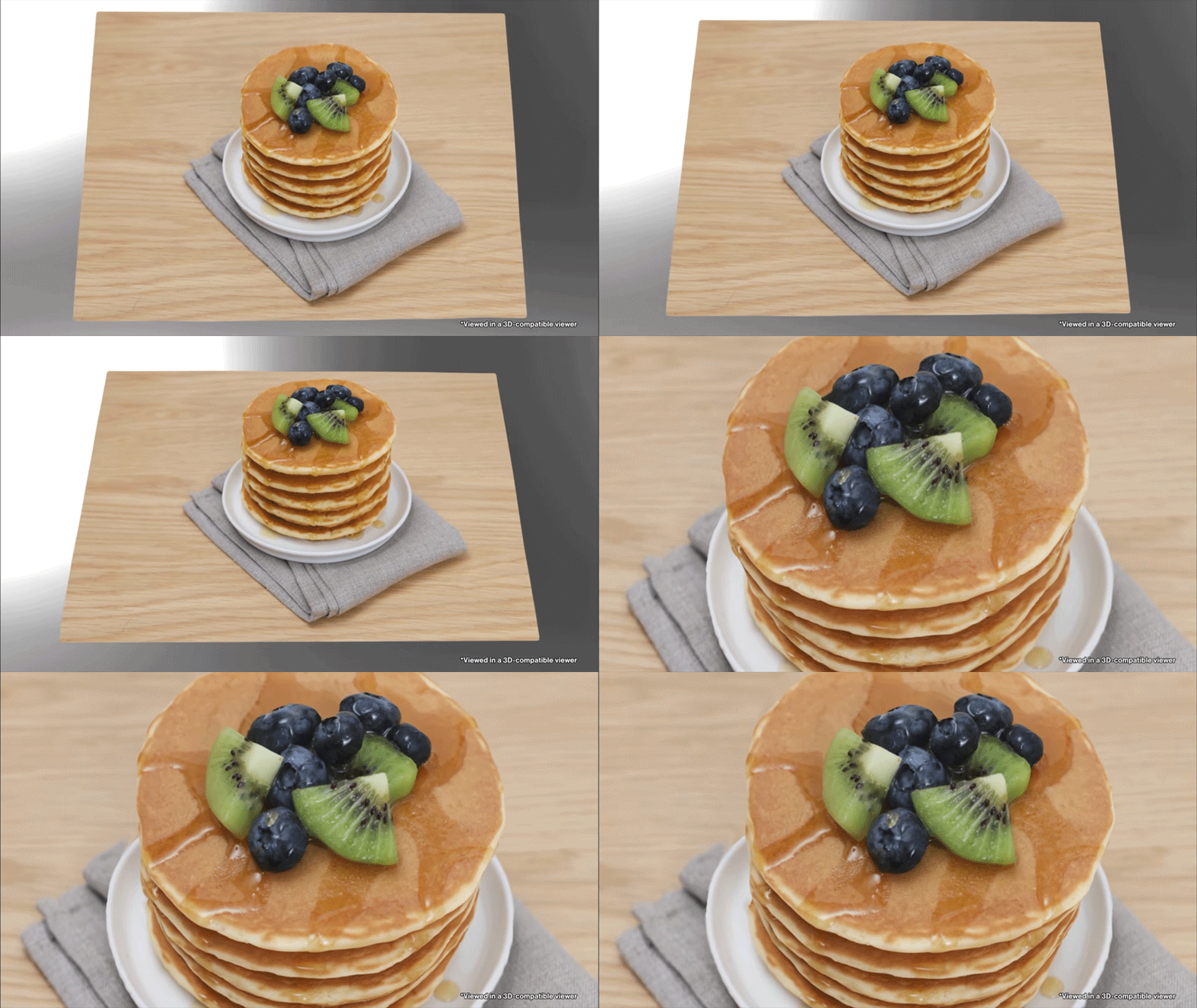
Those two photodiodes see the scene from very slightly different angles. That tiny offset is what encodes depth in Dual Pixel RAW files and in supported R8 Mark II JPEGs. The Converter app turns that information into 3D shape data, then maps the captured image onto it.
What we think
Generating 3D from a standard EOS camera is a clever use of hardware Canon already ships. The sample images look a bit artificial so far. Still, pulling this off with no extra hardware is impressive.
Working from a single frame is the real advantage. Multi-image methods introduce artifacts and softness when the frames don’t line up, and none of that applies here. The depth data comes from one exposure.
Exporting 3D models is the part worth watching. Photographers who work alongside CGI artists could build scene elements straight from a photo, skipping a scan or a manual model. How usable those models are in production is the open question, and that’s something we’ll only know once people start running real projects through it.
Availability
The Dual Pixel 3D Converter app arrives October 3, 2026. Canon says it will be free at launch, though the company notes that specifications and terms of use could change later. A list of compatible cameras and lenses goes up on Canon’s website when the app ships.

