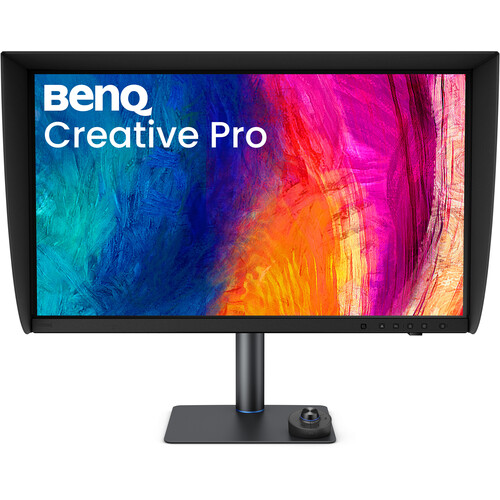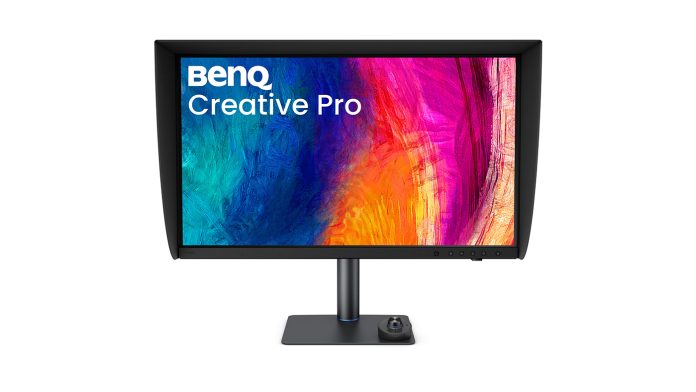
BenQ has launched a pair of 4K monitors aimed at video editors and colorists. The BenQ Creative Pro PV50 series includes the 32-inch PV3250U and the 27-inch PV2750U. Both cover 99% of the DCI-P3 color gamut. Each one also supports 16-bit 3D LUT hardware calibration, so you can recalibrate the panel itself as it ages.
Colors
According to BenQ, the PV3250U and PV2750U cover 99% of the DCI-P3 color space used in digital cinema and HDR work. Rec. 709 coverage hits 100%. For editors, that means a single monitor can handle SDR deliverables for YouTube or broadcast while still showing the wider gamut HDR projects need.
Factory calibrated
Each monitor ships factory calibrated with its own calibration report. BenQ says both screens average a Delta E below 1 out of the box. At that level, color errors are essentially invisible to the eye.
The monitors are also Calman Verified and Pantone Validated. They carry Pantone SkinTone Validation as well. That matters more to video shooters than it might sound, since skin tones are the first thing viewers notice when a grade goes wrong.
Shadow details
Crushed blacks can ruin a moody scene. BenQ’s answer is Dark-Tone Clarity, powered by AQCOLOR Technology. It uses a fine-tuned gamma curve to pull out shadow detail without shifting tones.
BenQ also promises corner-to-corner uniformity, meaning color and brightness should look the same at the edges as they do in the center. Anyone who has chased a color shift that only existed in one corner of a cheap panel will appreciate that. The 16-bit 3D LUT hardware calibration rounds things out. Calibration data lives in the monitor itself, with enhanced grayscale calibration to keep color accurate across the full tonal range.
Screen specifications
Both models use a 3840 x 2160 panel. Standard brightness is 450 nits, with HDR peaks reaching 600 nits. Refresh rate tops out at 120Hz. Response time is 5ms. For HDR formats, the monitors support HDR10 as well as HLG. They also meet the VESA DisplayHDR 600 standard.
Contrast ratio
Inside both monitors are IPS Black panels with a 3000:1 native contrast ratio. That’s roughly triple what a typical IPS panel manages. Under Rec. 709 conditions, black levels drop to 0.03 nits, which BenQ says exceeds Grade 1 SDR requirements. In practice, you get deeper blacks without losing texture in the darkest parts of the frame.
Connectivity
A single Thunderbolt 4 cable handles video plus data. It also delivers up to 96W of power to a connected Mac. For MacBook Pro editors, that makes for a clean one-cable desk.
Thunderbolt 4 in and out is only part of the port selection. You also get HDMI 2.1 along with DisplayPort 1.4. Peripherals connect through three USB-A downstream ports alongside one USB-C downstream port. A single USB-C upstream connection completes the set. There’s a headphone jack too.
Other features
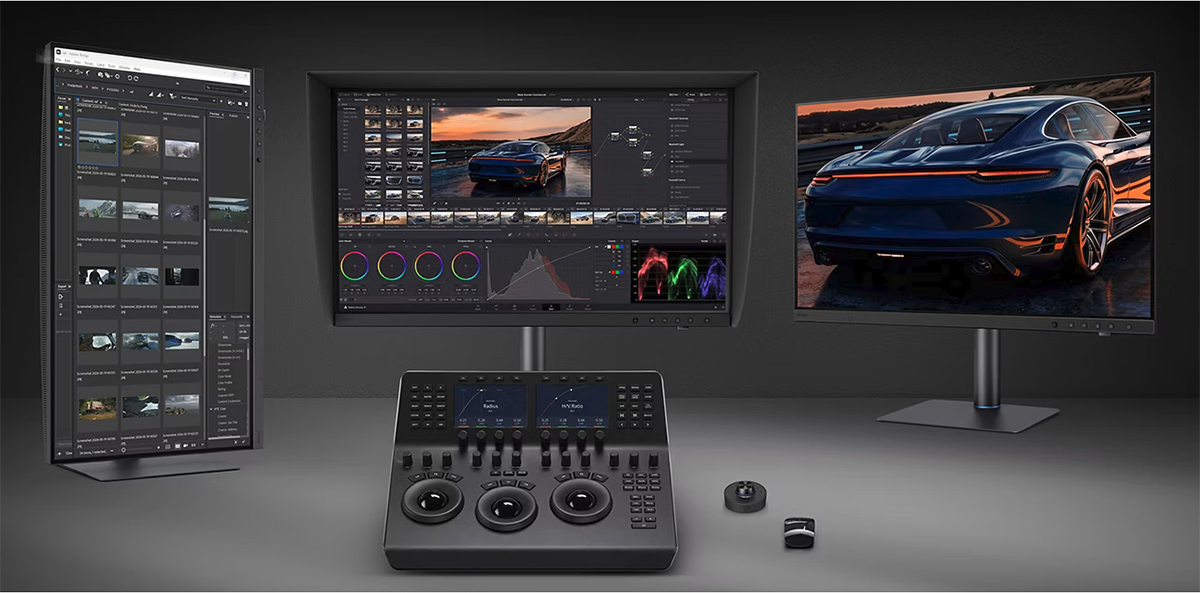
In the box, you’ll find a Hotkey Puck that gives you one-click access to essential color modes and preview tools. A magnetic shading hood comes along to cut ambient glare. If your edit bay has a window, you’ll use it.
What we think
When you’re grading, accurate color is the whole job. Factory calibration with a Delta E below 1 gives the PV3250U and PV2750U a trustworthy starting point. Hardware calibration keeps them there.
That high native contrast makes both monitors a strong fit for SDR finishing. HDR is a different story. With a 600-nit peak, they’re fine for checking HDR grades. They aren’t mastering displays for deliverables that target 1,000 nits or more.
At these prices, that’s not a knock. A calibrated 4K monitor for $1,100 to $1,600 costs a fraction of a true reference display. If video pays at least some of your bills, that’s a smart place to spend.
Pricing and availability
The 32-inch BenQ PV3250U is available now for $1,600. For a limited time, BenQ is running an early bird promotion that knocks $100 off that price. The company says the 27-inch PV2750U will arrive in the fall for $1,100.